

Humana People to People in South Africa (HPPSA) seeks the services of a skilled evaluation consultant to undertake an External Final Evaluation of the project “Community-led Early Childhood Development (ECD) initiatives for vulnerable children in South Africa” Phase III funded by the Government Princier de Monaco and implemented over 36-months (1st of October 2022 – 30th of September 2025).
The evaluation will run from 20th October 2025 to 12th December 2025
1- Project Summary
HPPSA is funded by the Government of Monaco to implement a “Community-led Early Childhood Development (ECD) initiatives for vulnerable children in South Africa” program in iLembe District, specifically in the municipalities of Ndwedwe, Mandeni and Maphumulo.
The project aims to improve access to ECD services for vulnerable children through 55 ECD centres (General objective). 40 centres are located across the three sub-districts (Mandeni, Ndwedwe, and Maphumulo). The programme replicates HPPSA’s successful community-based model piloted in Phase I (2017–2019) and expanded in Phase II (2019–2022).
Three main specific objectives were planned, with their respective key results:
SO1: To increase access to and provision of quality community-based ECD services for vulnerable children from disadvantaged communities in the four municipalities.
SO2: To facilitate the exchange of best practices, sharing of experiences, and lessons learned at the provincial level with other ECD stakeholders.
SO3: To mobilize teachers, children, and the stakeholder community to deliver epidemic (COVID-19 and GBV) prevention and mitigation interventions.
The project is implemented over 36 months (October 2022 – September 2025) with a total budget of €240,000, provided by the Gouvernement Princier de Monaco (€80,000 annually). The evaluation will assess achievements against these objectives and results, and the extent to which the interventions have been effective, efficient, relevant, and sustainable
|
To provide quality early childhood development and basic education for all in South Africa |
||
|
Specific Goals |
Anticipated Results |
Result Indicators for the period |
|
S.O.1 To increase access to and provision of quality community based ECD services for vulnerable children from disadvantaged communities from 4 municipalities in iLembe District, KZN |
Expected Result 1.1: Improved early learning for 1,800 children aged 2-4 enrolled in the 55 targeted ECD centres |
Indicator 1.1.1: of preschools registered at DSD/DBE at the project’s end (target: 40)
Indicator 1.1.2: Of preschools refurbished/maintained/constructed, equipped with pedagogical materials (target: 55 ECD centers) Indicator 1.1.3: Of teachers who received a NQF level 4 teacher training (target: 40, min. 40% women)
Indicator 1.1.4: Of children enrolled at the ECD centers (target: - 25 children per school, 55% girls) |
|
Result 1.2: Strengthened and expanded the capacity to implement an integrated ECD programming.
|
Indicator 1.2.1: Number Of children provided with daily breakfast/ lunch at the preschools (target: 1800 children, 55 schools, 55% girls)
Indicator 1.2.2: # Of children provided with an annual health checkup (target: 1, 800 children, 55% girls) Indicator 1.2.3: Number of parents referred to child protection services and psychosocial support during project implementation among supported parents
|
|
|
Result 1.3: Improved daily care through improved water, sanitation, and hygiene practices
|
Indicator 1.3.1: Number schools rehabilitated/constructed water and Sanitations systems Including latrines and handwashing systems) (target:40) Indicator 1.3.2: Number of Child health Clubs formed. Indicator 1.3.3: Of health campaigns with topics on water, hygiene, nutrition, organized at the school or the children and their parents (target: 11) |
|
|
R.1.4. Strengthened parental and community involvement and support in the communities where ECD centres are located
|
Indicator 1.4.1: Number of Parents committees established/revived (target 40 Committees with minimum of 5-10 members in each Committee). Indicator: 1.4.2: Number of Provide support to primary care givers (including parental skills and psychosocial support) Indicator 1.4.3: Number of parents committee member trained by teachers (on nutrition, hygiene, and health (target: 275 parents) Indicator 1.4.4: Number of Community actions organized to support the ECD centres- (school cleaning, GBV awareness, COVID-19 messages |
|
|
S.O.2 To facilitate the exchange of best practices, sharing of experiences and lessons learned at the provincial level with other ECD stakeholders. |
R 2.1 Improved practices and outcome from 55 ECD centres |
Number of seminars conducted (Target: 3 seminars) Number of documents/reports produced (target: 3 Reports/Documents)
|
|
S.O.3 To mobilize the teachers, children, and the stakeholder community to deliver epidemic (COVID-19 and GBV) prevention and mitigation interventions |
R 3.1 Improved prevention and mitigations innervations to 4,200 people (children, teachers, and community members around the targeted 55 ECD centres) |
Number of IEC materials provided Number of PPES distributed |
2.1 Overall Objective
The final evaluation will assess the success, efficiency, and sustainability of the project. It will also provide recommendations for future programming, based on lessons learned, and analyse the degree to which objectives were achieved through community participation.
2.2 Specific Objectives
The evaluation will generally:
And main specifically:
The evaluation will address two main core questions:
And main specifically:
The evaluation should consist of:
3.1. Desk Review: Review of archived and available literature related to the project. This should include, but is not restricted to annual, quarterly reports.
3.2. Inception report: Development of an evaluation approach and data collection tools. This should include the following:
3.3. Field Visits:
Field visits will take place at the different project offices and should include the agreed sample of beneficiaries and stakeholders. Stakeholders should include:
This is expected to require between 3-4 weeks, depending on the exact methodology. This should include time spent with the project staff in HPPSA Head Quarters as well remote interviews with relevant members that are part of the program (support staff).
3.4. Debriefing Session: Will need to provide a debriefing session outlining the preliminary findings and likely conclusions from the evaluation.
3.5. Draft Evaluation Report:
Draft evaluation report must be in English that meets the requirements below:
3.6 Final Evaluation Report: should incorporate any relevant feedback that is provided by HPPSA.
Reporting Template format for final evaluation report.
In addition, the final report should contain at least the following annexes:
The evaluation field work is expected to be undertaken by 20th of October 2025 to 14th November 2025. The final report must be submitted by 12 December 2025.
Indicative Timeline for Evaluation is below:
|
Key Tasks |
Time Period |
Location |
|
Desk Review |
2 days (20th -21st October 2025) |
Pinetown, Durban |
|
Inception report |
2 days (23rd -24th October 2025) |
Pinetown, Durban |
|
Field Visits |
4 weeks (27th October – 21st November 2025) |
Local municipalities of Ndwedwe and Maphumulo |
|
Debriefing Session |
1 day (24th November 2025) |
Pinetown, Durban |
|
Draft Evaluation Report |
10 days (25th November – 5th December 2025) |
Pinetown, Durban |
|
Final Evaluation Report |
5 days (12th December 2025) |
Pinetown, Durban |
Type of Contract: The consultant will be offered a fixed-price contract for the duration of the evaluation that will include all the activities and requirements listed above.
HPPSA will guarantee internet connection, workspace for the consultant to perform their work.
The consultant will be responsible for their accommodation, meals and transportation and he/she will be responsible for his/her own safety and any health expenses for the duration of the contract. The consultant will have to guarantee the necessary material (including computing means) to carry out their work.
Reporting: The consultant will report to the HPPSA designated National Headquarter Officer/Senior Program Manager for the evaluation deliverables, and to HPPSA Country Program Manager for all issued related to the program and fieldwork, including travel arrangements.
Preference will be given to applicants who meet the criteria below:
Interested consultants/firms must submit:
Submission Deadline: 10th October 2025
Email submissions to:
Hand-delivered submissions:
5/11 Richmond Road
Westmead
Pinetown, 3610
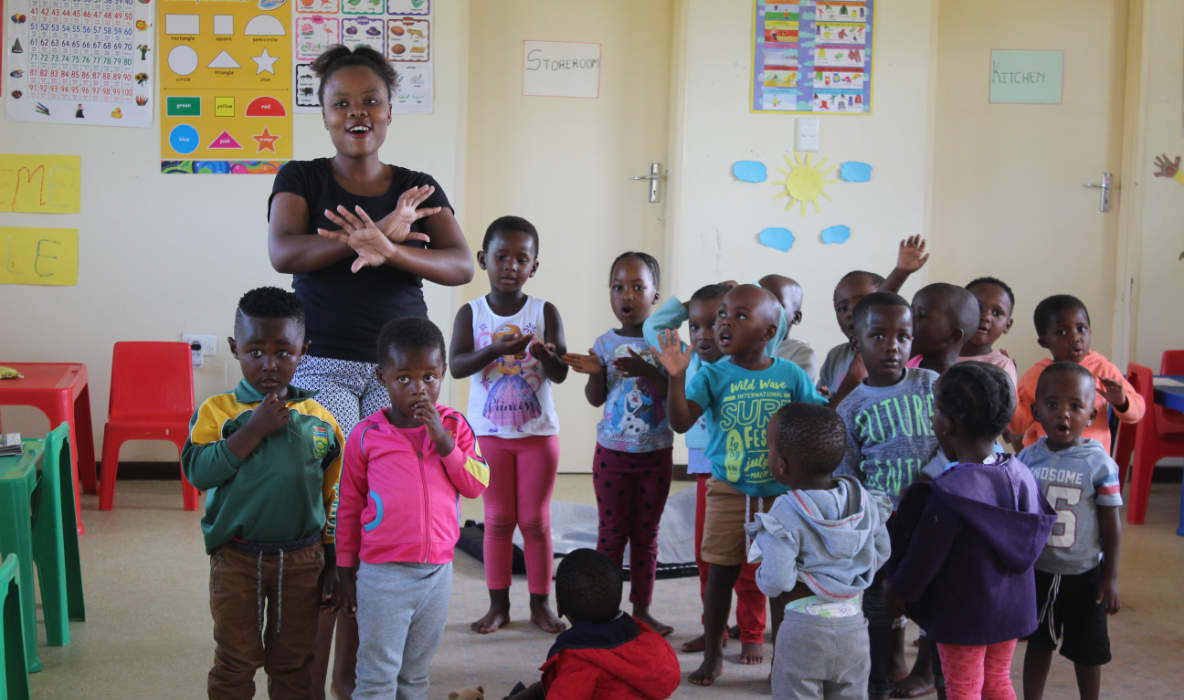
For over 30 years, Humana People to People in South Africa (HPPSA) has been a driving force for positive change. Established in 1995. We have worked tirelessly to tackle the most pressing challenges faced by underprivileged communities and we are a proud member of the international Humana People to People Movement. Our journey began in Soweto, and today, our work aligns directly with the Sustainable Development Goals (SDGs) and South Africa's National Development Plan (NDP). Our mission is clear: our mission is to empower communities and their people.
Thank you for considering a donation to HPPSA in support of our work in South Africa.
Please take a moment to read our Donations Policy Then, enter your desired amount below and click on the Donate button to proceed.
Enter an amount